
Between UNDRIP and Domestic Law: The Uncertain Duty to Consult in the United States
Three years after the General Assembly adopted the UN Declaration on the Rights of Indigenous Peoples (UNDRIP) in 2007, the United States formally endorsed the declaration in December 2010.[i] UNDRIP emerged from twenty years of strenuous negotiation between States and Indigenous peoples’ representatives and is widely considered the most comprehensive enumeration of contemporary Indigenous rights law.[ii] As a General Assembly resolution, however, it does not possess the binding force of a treaty, and its articles are not legally obligatory on endorsing States.[iii] Nevertheless, UNDRIP played a significant role in solidifying one of the most important Indigenous rights protections of the 21st century: the duty of consultation.[iv]
Modern economic and technological advancement increasingly depends on the extraction of natural resources on Indigenous territories.[v] Dominant industry trends operate in direct tension with tribal interests, as Indigenous peoples’ spiritual and cultural livelihoods are deeply rooted in an enduring and singular relationship with their sacred lands.[vi] In response, Article 32 of UNDRIP requires States to consult and cooperate in good faith with Indigenous peoples before the implementation of any project on Indigenous lands, particularly “in connection with the development, utilization or exploitation of mineral resources.”[vii] This duty of consultation is rooted in fundamental Indigenous rights of self-determination and traditional ownership, allowing Indigenous communities to maintain control over their cultural, economic, and social development.[viii] Some UNDRIP States have carried out the duty to consult by passing domestic legislation to enforce good-faith consultation mechanisms in their own territories.[ix] The United States, however, has not established a federal statutory mandate to consult in most state and federal projects on Indigenous land.[x] Instead, consultation obligations arise from a combination of executive orders, regulations, and agency policies.[xi]
The complex legal regime of consultation in the U.S. can be divided into three key categories: government-to-government directives, federal statutes, and individual agency policy.[xii] The cornerstone of this first category, Executive Order 13175, requires federal agencies to conduct consultation with Tribes when agency policies will have “substantial direct effect” on Tribes or “substantial implications.”[xiii] Additionally, Presidential Memoranda have standardized tribal consultation best practices, such as designating an agency point of contact for consultation, creating guidance on consultation notices, etc.[xiv] As for the second category, several federal statutes impose specific consultation requirements for federal actions that may affect cultural resources or historic properties.[xv] The National Historic Preservation Act of 1966, for example, outlines a process for federal agencies to follow when certain projects may affect historic resources.[xvi] In consideration of such impacts, the agency must consult with any Tribe that attaches “historic and cultural significance” to historic properties potentially impacted by the project.[xvii] Additionally, the Archaeological Resources Protection Act of 1979 directs Secretaries of Agriculture and Defense, as well as the Chairman of the Board of the Tennessee Valley Authority, to consult with Tribes before implementing regulations that may affect archaeological resources on federal or Tribal lands.[xviii] Finally, federal agencies, such as the Departments of the Interior and Agriculture, have independently issued strategies for effective Tribal consultation procedures and objectives across their respective activities.[xix]
Tribal associations, scholars, and industry stakeholders have criticized these consultation standards as unclear and impractical.[xx] Some have advocated for federal agency guidance to be more transparent and predictable to clarify which projects and activities would be subject to consultation and what form of consultation should be used.[xxi] Tribal Associations, as well as Members of Congress, have stated that current agency consultation practices have become inconsistent and unenforceable, absent a clear statutory directive.[xxii] The passage of legislation mandating consultation in federal agency projects conducted on lands belonging to federally recognized Tribes could rectify these inconsistencies and bring the U.S. in line with international human rights standards. The U.S. could standardize the types of projects that trigger the duty of consultation and implement the mechanism of Free, Prior, and Informed Consent currently championed by UNDRIP and international human rights jurisprudence.[xxiii]
Efforts to establish a statutory consultation mandate in the United States have largely failed. U.S. Representative Raúl M. Grijalva introduced a bill establishing consultation procedures for any proposed federal action on Tribal lands was introduced back in May 2021.[xxiv] The Requirements, Expectations, and Standard Procedures for Effective Consultation with Tribes (RESPECT) Act would have required federal agencies consult with Tribal leadership “(1) before undertaking any proposed federal activity or finalizing any federal regulatory action that may have a tribal impact, and (2) for all activities that would affect any part of federal land sharing a border with Indian land.”[xxv] After referral to the House Judiciary Subcommittee on Antitrust, Commercial, and Administrative Law, however, the RESPECT Act stalled.[xxvi]
As global trends increasingly challenge inherent Indigenous rights to self-determination, the United States bears heightened responsibility for its 574 federally recognized Tribes.[xxvii] The enactment of formal legislation codifying the duty of consultation could establish a consistent and enforceable mechanism across U.S. territory, especially as collaboration with Indigenous peoples becomes indispensable to technological development. In an evolving global economy, the U.S. must continue to honor its enduring obligations to Tribal nations.
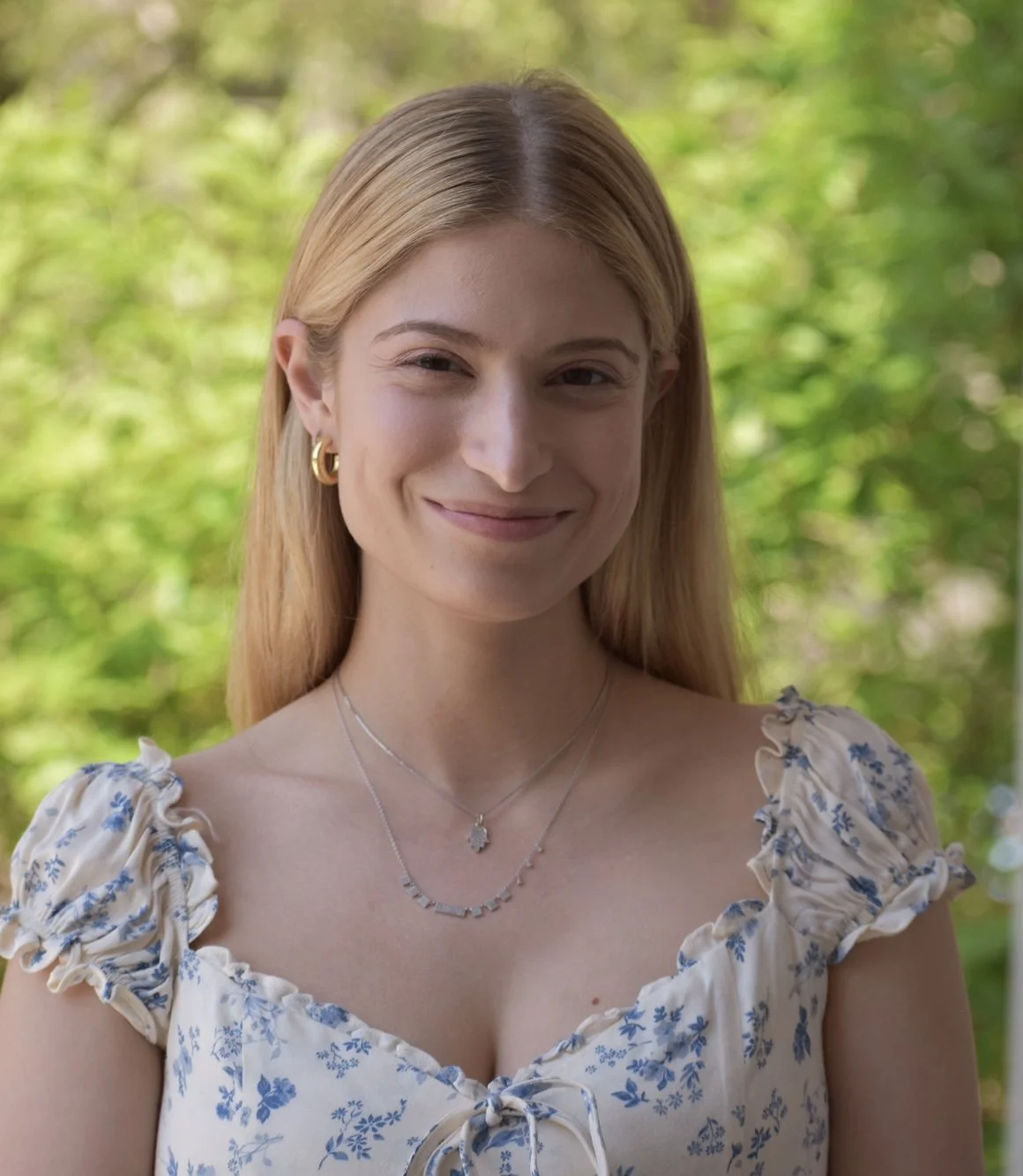
Rachel Amran is a staff member of Fordham International Law Journal Volume XLIX.
[i] See American Civil Liberties Union, United States Endorses International Declaration On Indigenous Rights (Dec. 17, 2010), https://www.aclu.org/press-releases/united-states-endorses-international-declaration-indigenous-rights.
[ii] See Mauro Barelli, Free, Prior and Informed Consent in the Aftermath of the UN Declaration on the Rights of Indigenous Peoples: Developments and Challenges Ahead, 16 Int’l J. Hum. Rts. 1, 17 (2012).
[iii] See Kelsey Peterson, Free, Prior and Informed Consent: ILO 169 and the UNDRIP, in FREE, PRIOR AND INFORMED CONSENT: PATHWAYS FOR A NEW MILLENNIUM 2 (Am. Indian Law Program & Getches-Wilkinson Ctr. for Nat. Res., Energy & the Env’t, Univ. of Colo. Law Sch. eds., 2013).
[iv] See Barelli, supra note 2, at 1.
[v] See id.
[vi] See id; see also Dr. Nikolas Sellheim, Silencing the Screaming — The Discovery of Rare Earth Metals in Sweden, Polar Connection (June 12, 2023), https://polarconnection.org/rare-earth-metals-sweden/.
[vii] United Nations Declaration on the Rights of Indigenous Peoples, G.A. Res. 61/295, art. 32 (Sept. 13, 2007).
[viii] See Barelli, supra note 2, at 17.
[ix] See e.g., the Native Title Act in Australia: Central Land Council, The Native Title Act Made Simple (Mar. 2021), https://www.clc.org.au/wp-content/uploads/2021/03/CLC-Native-Title-made-simple.pdf; See also Canada: Crown–Indigenous Relations & N. Affs. Can., Government of Canada and the Duty to Consult, https://www.rcaanc-cirnac.gc.ca/eng/1331832510888/1609421255810 (last modified Aug. 5, 2025).
[x] See Nicole T. Carter et. al., Cong. Rsch. Serv., R48093, Federal-Tribal Consultation: Background and Issues for Congress (2024).
[xi] See id.
[xii] See id.
[xiii] Exec. Order No. 13,175, 65 Fed. Reg. 67,249, Consultation and Coordination with Indian Tribal Governments, (Nov. 6, 2000).
[xiv] See Memorandum of Nov. 30, 2022, Uniform Standards for Tribal Consultation, 87 Fed. Reg. 74,479 (Dec. 5, 2022).
[xv] See Carter, supra note 10.
[xvi] See 54 U.S.C. §306108.
[xvii] 54 U.S.C. §302706(b).
[xviii] See 16 U.S.C. §470ii.
[xix] See Carter, supra note 10.
[xx] See id.
[xxi] See id.
[xxii] See id.
[xxiii] See Tara Ward, The Right to Free, Prior, and Informed Consent: Indigenous Peoples’ Participation Rights within International Law, 10 NW. J. HUM. RTS. 54 (2011).
[xxiv] See Environmental Law Institute, Federal Tribal Consultation (Overview) (May 2024), 13 https://www.eli.org/sites/default/files/files-pdf/7-%20Federal%20Tribal%20Consultation%20%28Overview%29.pdf.
[xxv] Requirements, Expectations, and Standard Procedures for Effective Consultation with Tribes Act (RESPECT Act), H.R. 3587, 117th Cong. § 101(a) (2022).
[xxvi] See Environmental Law Institute, supra note 24, at 13.
[xxvii] See Mainon A. Schwartz, Cong. Rsch. Serv., R47414, The 574 Federally Recognized Indian Tribes in the United States, (2024).
This is a student blog post and in no way represents the views of the Fordham International Law Journal.