
Court of Arbitration for Sport: An Olympian’s Last Stand
For an Olympic athlete, the Court of Arbitration for Sport (CAS) is the sole body where related disputes can be resolved.[i] When becoming an Olympic athlete, a contract binds them to arbitration through the CAS as their only means for relief.[ii] Created by the International Olympic Committee (IOC), the CAS is a private arbitration tribunal designed to resolve disputes directly or indirectly related to sports.[iii] However, the CAS is not infallible and been subject to criticism regarding their decisions. One such area are the arbitration decisions regarding an athlete’s violation of the anti-doping policy.[iv] The CAS is the exclusive tribunal for violations of the anti-doping rules and regulations created by the World Anti-Doping Agency (WADA).[v] Throughout the history of the Olympics from 1968 to 2022, there have been 250 confirmed doping cases and 143 medals revoked from the Summer Olympics alone.[vi] There are claims that the lack of uniformity in decisions and ambiguity with the WADA code has led to criticisms and lack of credibility of the CAS.[vii]
Violations of the anti-doping World Anti-Doping Code are enforced with strict liability, removing the violator’s intent, negligence, or knowing use of a banned substance when establishing a violation.[viii] While most violations are subject to this strict scrutiny standard, there are exceptions.[ix] Article 10 of the Code provides loosened standards for protected persons, such as minors.[x] For instance, 15-year-old Russian figure skater, Kamila Valieva’s doping violation qualified for a loosened standard and the CAS found that Valieva’s positive test does not constitute doping.[xi] The issue with this lack of consistency is illuminated when comparing the decision to that of Mariano Puerta, an adult tennis player who unknowingly ingested a prohibited substance when drinking his wife’s water.[xii] In Puerta’s situation, the Court did not allow for a loosened standard despite having a very similar situation to Valieva.[xiii] As a result, Puerta was subject to an eight year sanction.[xiv] Considering that a considerable portion of Olympic athletes are minors, this loosened standard has been met with complaints regarding fairness and possibly repercussions for minors who may be subject to greater pressure from coaches to take banned substances.
Even among those who have been charged with doping violations, there has been disparate treatment of the severity of penalties based on the status of an athlete. Tennis star Maria Sharapova’s use of meldonium was found by the CAS to be unintentional,[xv] and they reduced her suspension from two years to fifteen months.[xvi] Similarly, a top male tennis athlete, Jannik Sinner, faced a reduced, three-month ineligibility period for an anti-doping violation.[xvii] On the contrary, lesser known athletes in the same field such as Puerta faced harsher penalties for similar violations.[xviii] While both Sharapova and Sinner had multiple grand slam wins and were at the peak of their sport, Puerta did not have such accomplishments and exposure and faced a drastically different consequence in a tribunal that purports fairness and strict liability for anti-doping violations.
The inconsistencies of the CAS decisions and the ambiguity in the WADA code have led to sweeping consequences for many athletes, who deserve equitable resolutions to potentially career changing penalties. While there are no concrete answers to this issue, there needs to be greater coordination between CAS and the WADA to ensure that all athletes get the same treatment in the tribunal. One potential fix is to remove an age minimum for a loosened standard so that all athletes should be subject to strict scrutiny as they are all competing in the same Olympics. Another option is to either lower the standard of scrutiny or keep all enforcement actions at strict scrutiny to promote consistency. Even if there are loosened standards, enforcement should not be fickle, but rather through a set of guidelines established by the CAS and WADA so that one’s fame and success is not a justification for a reduced sentence.
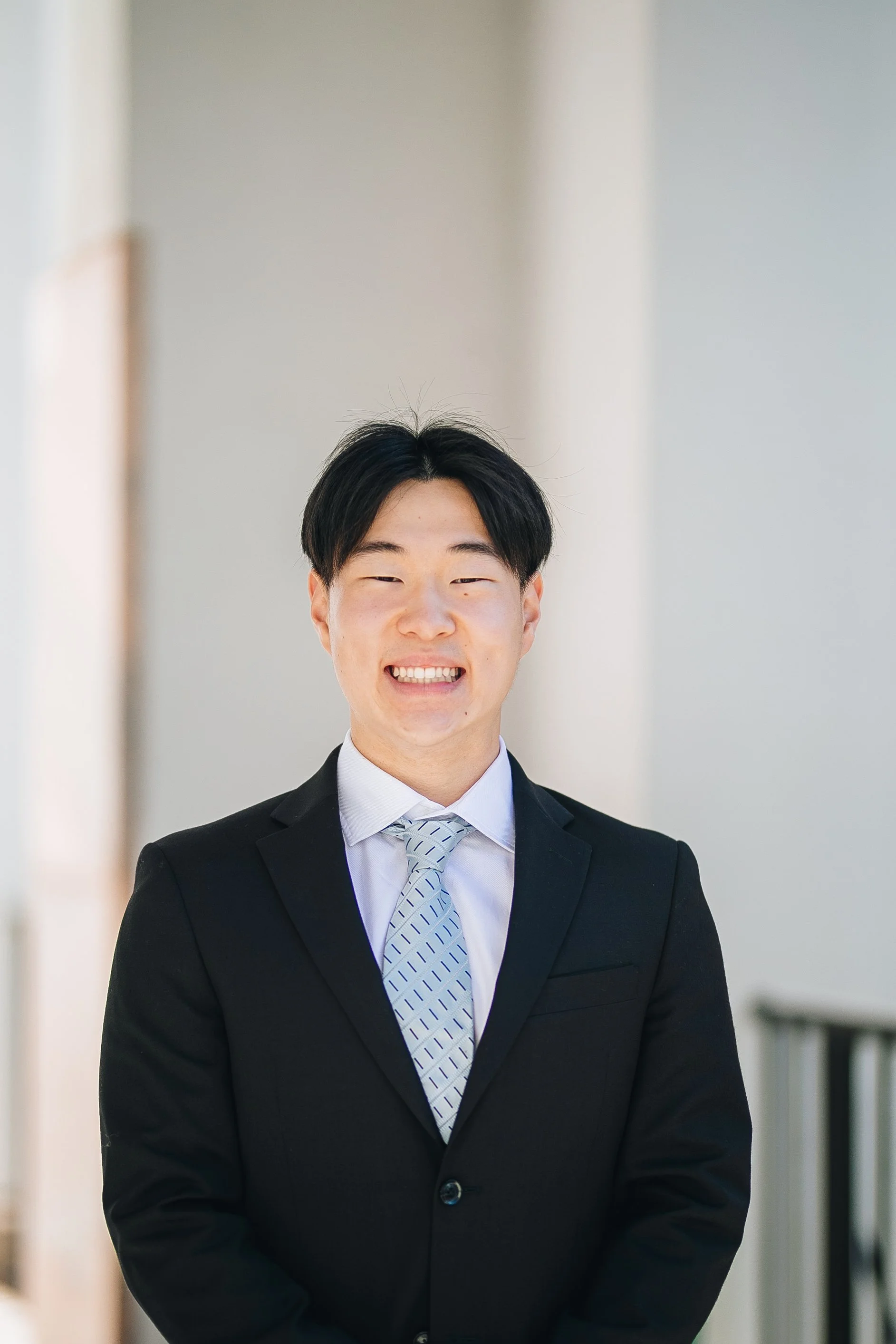
Derek Kim is a staff member of Fordham International Law Journal Volume XLIX.
[i] See History of the CAS, Ct. of Arb. for Sport, https://www.tas-cas.org/en/general-information/history-of-the-cas.html (last visited Nov. 5, 2025).
[ii] See Melissa R. Bitting, Mandatory, Binding Arbitration for Olympic Athletes: Is the Process Better or Worse for "Job Security?", 25 Fla. St. U. L. Rev. 655, 671 (1998).
[iii] See id, at 663.
[iv] See Chui Ling Goh & Jack Anderson, The Credibility of the Court of Arbitration for Sport, 13 Harvard j. sports & ent. L. 233, 234 (2022).
[v] See Zachary Gotlib, Athletes Have Rights, Too, Right: Investigating the Extreme Unfairness in Sports' Purported Supreme Authority - Why the International Court of Arbitration for Sport Fails to Reign Supreme, 24 Cardozo J. Int’l & Comp. L. 389, 411 (2016).
[vi] See Ramananda Ningthoujam, Anti-Doping Rules Violations in Modern Olympic Games, 65 J. Sports Med. & Phys. Fitness 974 (2025), https://doi.org/10.23736/S0022-4707.25.16691-7.
[vii] See supra note 5, at 399.
[viii] See Sherry Shi, Strict Liability: Controversies over Anti-Doping Laws in International Sport, Berkeley J. Int’l L. (Mar. 2, 2022), https://www.berkeleyjournalofinternationallaw.com/post/strict-liability-controversies-over-anti-doping-laws-in-international-sport.
[ix] See id.
[x] See id.
[xi] See id.
[xii] See Mariano Puerta v. Int’l Tennis Fed’n, CAS 2006/A/1025, Award, at 4 (Ct. of Arb. for Sport 2006), https://jurisprudence.tas-cas.org/Shared%20Documents/1025.pdf.
[xiii] See id, at 29.
[xiv] See id, at 9.
[xv] See Maria Sharapova v. Int’l Tennis Fed’n, CAS 2016/A/4643, Award, at 25, ¶ 94 (Ct. of Arb. for Sport 2016).
[xvi] See id, at 27.
[xvii] See Press Release, World Anti-Doping Agency [WADA], WADA Agrees to a Case Resolution Agreement in the Case of Jannik Sinner (Feb. 15, 2025), https://www.wada-ama.org/en/news/wada-agrees-case-resolution-agreement-case-jannik-sinner.
[xviii] See supra note 9.
This is a student blog post and in no way represents the views of the Fordham International Law Journal.